
How Long Does Social Media Take to Work for B2B? The First 90 Days
What a B2B company should expect from social media in its first 90 days, why reach moves before trust and inquiries, and how to judge progress month by month.
Reach and engagement can move within weeks of the first posts, but the trust that turns an audience into inquiries builds over months, and sales follow the length of your buying cycle. The first 90 days lay the foundations: an audit and baseline, a strategy and content calendar, the first posts, community management and a first monthly report. Judge the first quarter by whether those are in place and the right people start to notice, not by inquiries.
How long does social media take to work? It is usually the first question a B2B company asks before it hires anyone, and the honest answer depends on what "work" means. Reach can move within weeks. Trust, conversations and inquiries take longer, because B2B buyers decide slowly and in groups.
This guide sets out what happens in the first 90 days, what to expect at each stage and how to tell whether things are on track. We run organic social media for B2B companies ourselves, as a B2B social media agency, so we have a stake in the answer; the plan below is a typical one, not a promise.
Reach vs trust: why the first numbers are not the result
Reach is the easy part. Trust is what turns an audience into business, and it builds the way it does offline: slowly, through useful contact over time.
| Reach | Trust | |
|---|---|---|
| What it means | The right people see your posts | The right people believe you know your field |
| How fast it moves | Within weeks of steady posting | Over months |
| Where you see it | Members reached, impressions, profile visits | Comments and questions from buyers, followers in target roles, messages and inquiries |
| What builds it | A steady rhythm and posts written for your buyers | Useful expertise, replies and consistency |
A report that celebrates reach in month two is not wrong, but reach is the starting point. The signs of trust come later, and they are the ones to watch.
The first 90 days of social media, step by step
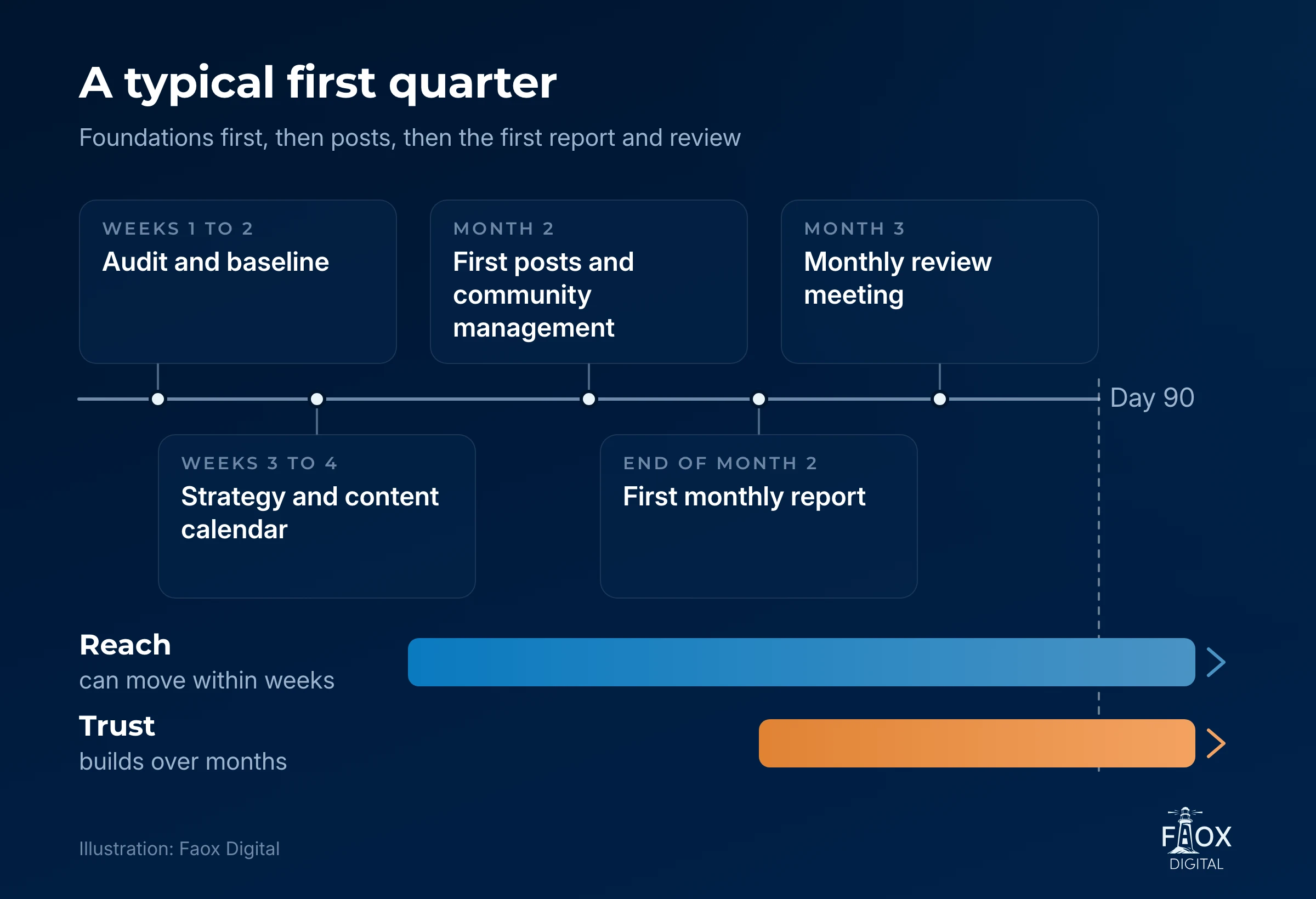
A typical first quarter looks like this; the exact split depends on how much already exists:
- Weeks 1 to 2: audit and baseline. Look at what the company posts, who follows it and what its buyers care about, and record the starting numbers.
- Weeks 3 to 4: strategy and content calendar. Set the point of view, platforms and rhythm for each market and language, then approve the first monthly calendar.
- Month 2: first posts. Publish on the agreed rhythm, with posts built around what your buyers ask, and ask your experts to take part.
- From the first post: community management. Reply to comments and messages within a working day and join the conversations where your buyers are.
- End of month 2: first monthly report. Compare the first weeks with the baseline and note what drew comments from the right people.
- Month 3: monthly review meeting. Agree what to keep, change or stop, and approve the next calendar.
What the audit and baseline should cover
The audit and baseline gives you a starting line, without which no later report can show progress. It should cover what you have posted and what drew a response, who follows you today (on LinkedIn, follower analytics show location, seniority, job function, industry and company size), what your buyers ask your sales team, and what comparable companies post.
Record a handful of starting numbers: members reached per month, engagement rate, the share of followers in your target industries and functions, visits from social media to your website and inquiries that started on social. The strategy and content calendar then builds on what the audit found, not on a template.
The first monthly report and review meeting
The first monthly report comes early, so it can show only a few weeks of posting. What it can show: the work done against the plan, first movement in reach, which topics drew comments and from whom, and any messages that came in. What it cannot show yet: a trend, or a reliable number of inquiries.
The monthly review meeting is where the report becomes decisions. Keep it short and regular, with the people who approve content in the room:
- What worked, what did not and why
- Questions buyers asked that deserve their own posts
- What changes in next month’s calendar
- Any approvals or expert input that slowed the work
Realistic expectations for the first quarter
Setting realistic expectations at the start saves a difficult conversation in month three. A good first quarter delivers:
- A written baseline and an approved strategy
- A steady posting rhythm that has not slipped
- Replies to every comment and message
- Growing reach among your target roles and industries
- The first comments, questions or messages from buyers
It does not deliver a set number of new followers, a post that takes off on cue or a stream of inquiries. Be wary of anyone who promises those; our checklist for choosing an agency lists the promises to question.
Signs the first quarter is off track
Slow inquiries in the first 90 days are normal. These signs are not, whoever does the work:
- No written baseline, so nobody can say what has changed.
- The posting rhythm slips after the first few weeks.
- Comments and messages wait days for a reply.
- Reports show follower counts and likes, but not who is engaging.
- The review meeting changes nothing in the next calendar.
- Posts sit for weeks waiting for approval.
Each of these can be fixed once someone names it, so raise them at the next review meeting.
What the first months take from you
Social media in B2B needs time from inside the company: experts who explain products, people who approve posts quickly and someone who owns the channel. The first month or two also include setup work, such as the audit and strategy, which some providers price as a separate project. Our guide to what social media management costs explains how scope drives the fee, and if you are still deciding who should do the work, see our comparison of an agency, consultant or in-house team.
How Faox Digital runs the first 90 days
At the start of a social media engagement, Faox Digital, a digital growth partner for B2B companies in complex and international markets, looks at where the company stands: its posts, its followers and what its buyers care about. The plan comes next, with a point of view, platforms and a posting rhythm for each market and language, and the client approves each month’s content calendar before anything is published. Once posting starts, we keep a steady rhythm and stay in the comments and messages. Our reports show reach among the right people, the conversations that start and the inquiries that follow, and the work carries on well past the first quarter.
Key takeaways
- Reach can move within weeks; the trust that turns an audience into inquiries builds over months.
- The first 90 days lay foundations: audit and baseline, strategy and content calendar, first posts, community management and a first monthly report.
- Use a monthly review meeting to turn each report into changes to the next calendar.
- B2B buyers research for months before contacting a supplier, so judge inquiries over quarters.
- Be wary of anyone who promises followers, a post that takes off or fast inquiries.
Frequently asked questions
How long does social media marketing take to work for B2B?
Reach and engagement usually move within weeks of steady posting. Conversations with the right people take months, and inquiries and sales follow your buying cycle, which averaged 10.3 months in 6sense’s 2026 report. Judge progress quarter by quarter.
What should happen in the first 90 days of social media management?
An audit and baseline, a strategy and content calendar you approve, the first posts on a steady rhythm, replies to comments and messages, a first monthly report and a review meeting that adjusts the plan.
When will social media bring leads for a B2B company?
Some conversations can start in the first quarter, but a steady flow of inquiries usually takes longer, because buyers research for months before contacting a supplier. Until then, watch the early signals: comments from your buyers’ roles, followers from target industries and the first messages.
How much does social media management cost per month?
It depends on the scope: channels, posting frequency, content types, languages and how much community management and reporting are included. The first months may also include setup work such as the audit and strategy, so compare quotes on the same written scope.
Sources
- 6sense: 2026 B2B Buyer Experience Report, 2026
- LinkedIn Help: Follower analytics for your LinkedIn Page, accessed November 2026
Let’s talk
Want social media that reaches the right people?
Tell us who you want to reach. We will look at your channels and suggest a plan your team can keep up with.